Project
Sempre Presente
(Aways Present)
Context
Company:
Itaú Unibanco
Employer:
BRQ
Role:
CX designer
Workplace:
Overview
High level goals
01
Map the main customer pain points reported in the Likert scale and identify new areas for improvement.
02
Create an iteration plan to improve the customer experience based on the insights gathered.
03
Increase the app’s NPS score by at least 20 points.
The team
The client (Itaú) trusted me to lead UX decisions for a team consisting of a PO, a Team Lead, a UI designer, and three developers. Although I led the project’s UX, I constantly reported my insights and decisions to the UX coordinator of this Itaú community.
Initial Challenge
When I joined the project, the Likert had several negative reviews and the NPS was at -19, indicating considerable user dissatisfaction. So we needed to figure out what factors were causing complications in the user experience.
Aproach
- 1. Analysis of Likert comments through Card Sorting
- 2. Heuristic analysis
- 3. Semi-structured interview
- 4. Analysis of collected data
- Defining features to improve usability.
Discovery
Analysis of Likert comments
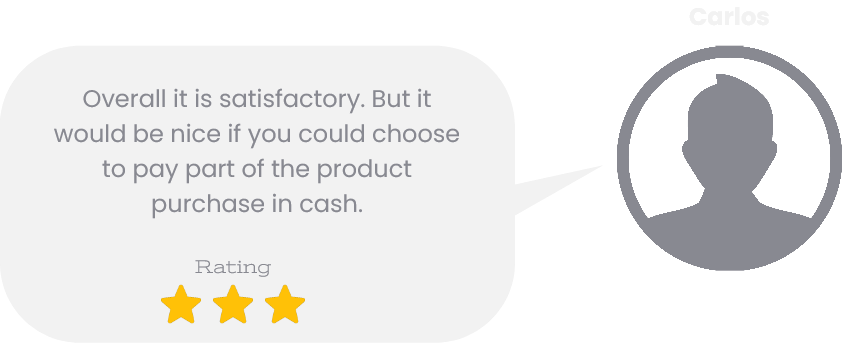
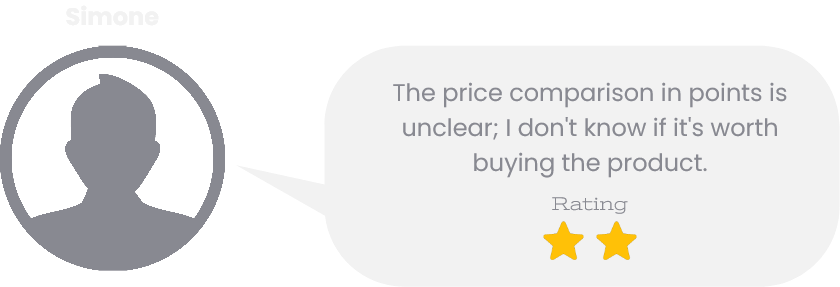
Some of Likert comments
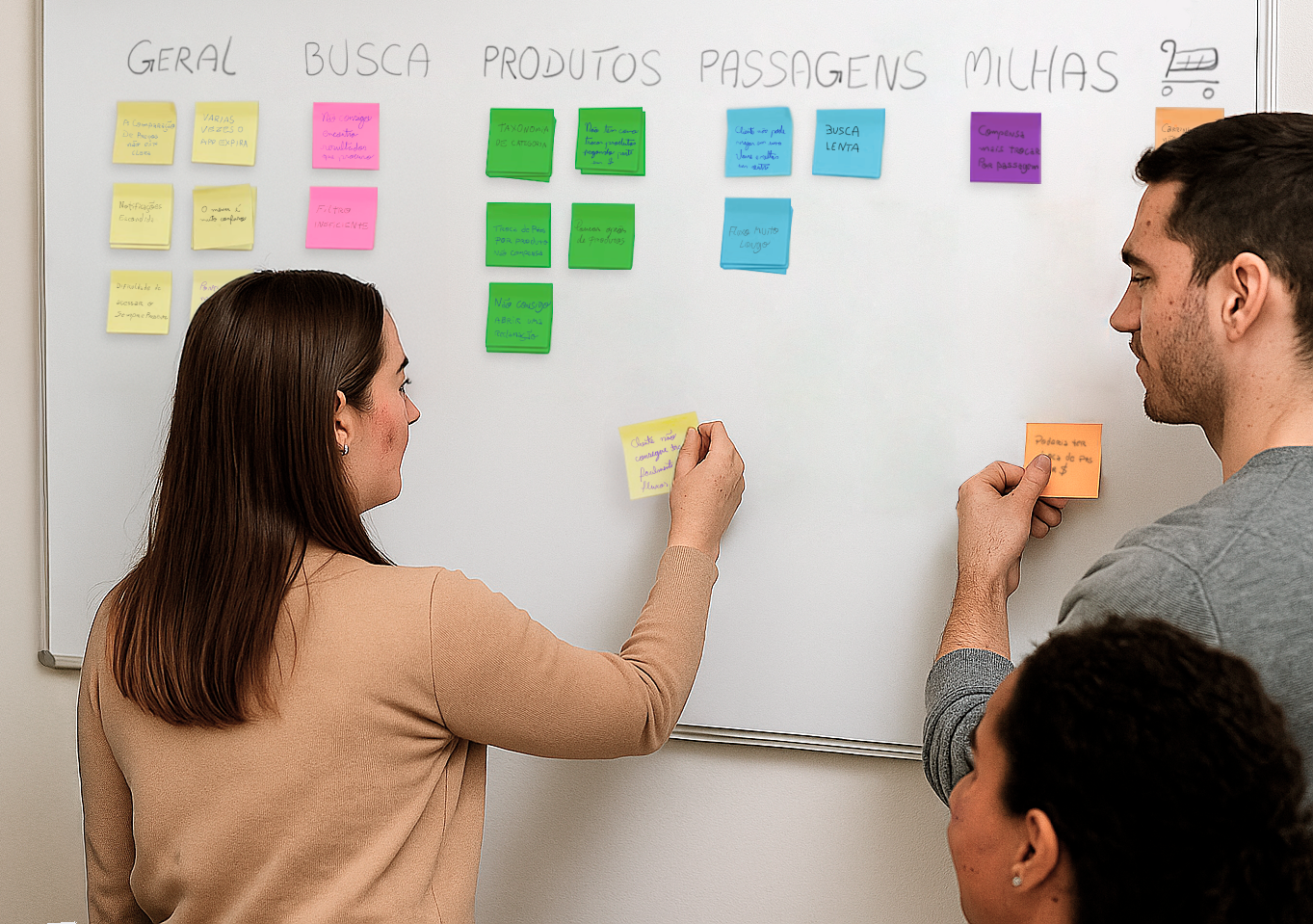
Card Sorting
Using the Card Sorting method, we grouped the comments into the following categories: general, search, product, airline tickets, miles and exchange. Then we assigned a score from 1 to 5 for the severity of the issues on each post-it. This helped us visually organize the pain points extracted from the Likert comments and understand their related categories, allowing us to identify the severity of each category’s impact on the customer experience.
Then we add up the points for each category and based on it
we establish
the initial priority for improvement:
- 1. Products category totalized 9 points
- 2. Search category totalized 6 points
- 3. Exchange category totalized 5 points
- 4. General category totalized 3 points
- 5. Airline tickets category totalized 2 points
- 6. Miles tickets category totalized 1 points
Heuristic analysis
To identify other problems that negatively impacted the user experience in the application, I applied a heuristic analysis to the three main workflows: Product, Airline Tickets, and Miles. Through this analysis, we identified several other usability problems:
1.
When a customer had a question during the product flow, such as about airline tickets or miles, they had to interrupt the flow to seek help and lost all the progress they had already made.
Affected Heuristics:
Help and Documentation
2.
The app’s notifications were hidden in a hard-to-reach location.
Affected Heuristics:
System visibility status
3.
The customer cannot easily move between the main flows: products, airline tickets, and miles.
Affected Heuristics:
User control and freedom
Recognition instead of memorization”
4.
The process of acquiring airline tickets is very long and lacks accuracy in its search for tickets.
This is due to:
– Searching for airline tickets takes a long time to return search results.
– the search is done by period instead of by time of day
– the customer cannot choose a class for each flight
– the customer has to manually fill in passenger data when the ticket is for themselves.
Affected Heuristics:
Flexibility and efficiency of use
User control and freedom
User interview
Therefore, I used semi-structured interviews, created from information obtained through card sorting and heuristic analysis, to deepen our understanding of the problems customers face when using the application.
Through the interviews, we validated the information obtained so far and discovered new insights.
The main insights founded:
- 1. Because the notifications were in a hard-to-reach location, customers didn't see when their card points were about to expire.
-
2. Customers frequently lose progress in their app journey due to:
- questions arising during the process
- sessions automatically ending
- journeys that are too long to complete - 3. Customers frequently accessed the app to explore purchasing options, but without searching for a specific product.
- 4. Customer having difficulty switching between one flow and another, such as from products to airline tickets, and access to the product flow itself is hindered by having to first select a category to access the flow.
- 5. The customer needs a way to resolve their doubts without losing progress during the acquisition process.
- 6. Customers miss the ability to compare prices of products and services in cash and to be able to purchase them by paying part of the purchase price in cash.
- 7. The access of Always Present flow is not intuitive.
- 8. The process of acquiring airline tickets is very long and lacks accuracy in its search for tickets.
Definition
With the new information obtained through Heuristic Analysis and user interviews, we realized the need to conduct a new collaborative workshop with the stakeholders involved to reassess the severity of the problems perceived by users and the usability issues in each category:
- 1. General category totalized 26 points
- 2. Products category totalized 12 points
- 3. Search category totalized 6 points
- 4. Exchange category totalized 5 points
- 5. Airline tickets category totalized 3 points
- 6. Miles tickets category totalized 1 points
Features
Therefore, I defined the improved features based on the difficulties faced by users and usability problems, prioritizing those that had the greatest weight in the card rating.
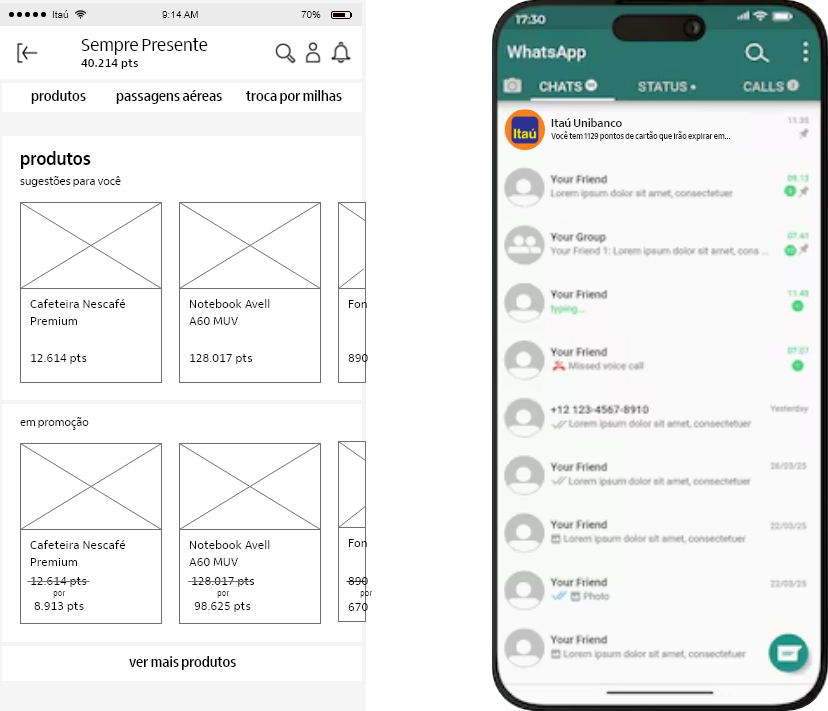
- 1. More accessible catalog notifications that alert users when their points are about to expire via the app and WhatsApp.
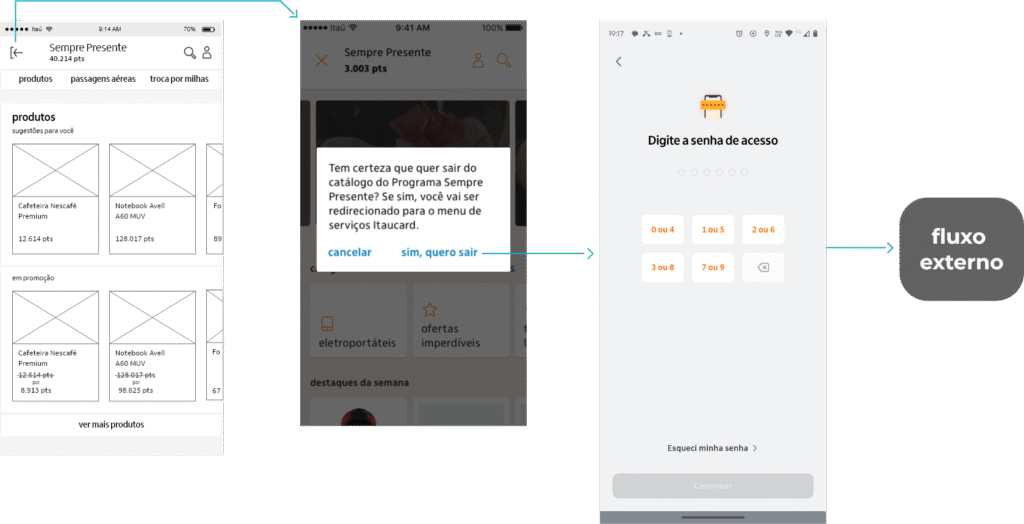
- 2. Configure the card app so that it doesn't log the user out while they are in Sempre Presente flows, but requires them to log in again if they access other app functionalities outside of Sempre Presente.
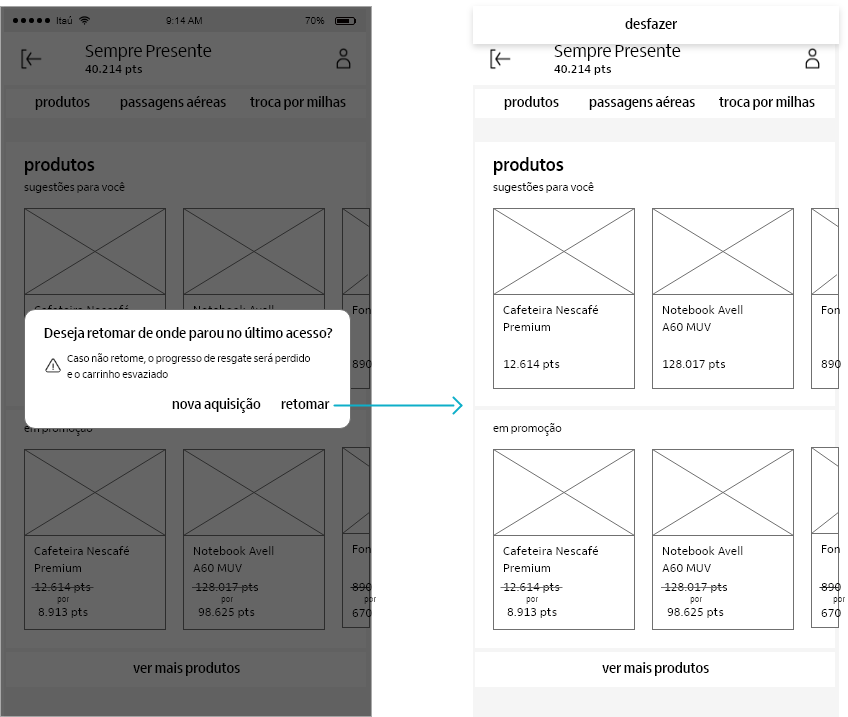
- 3. Automatically save user progress in flows.
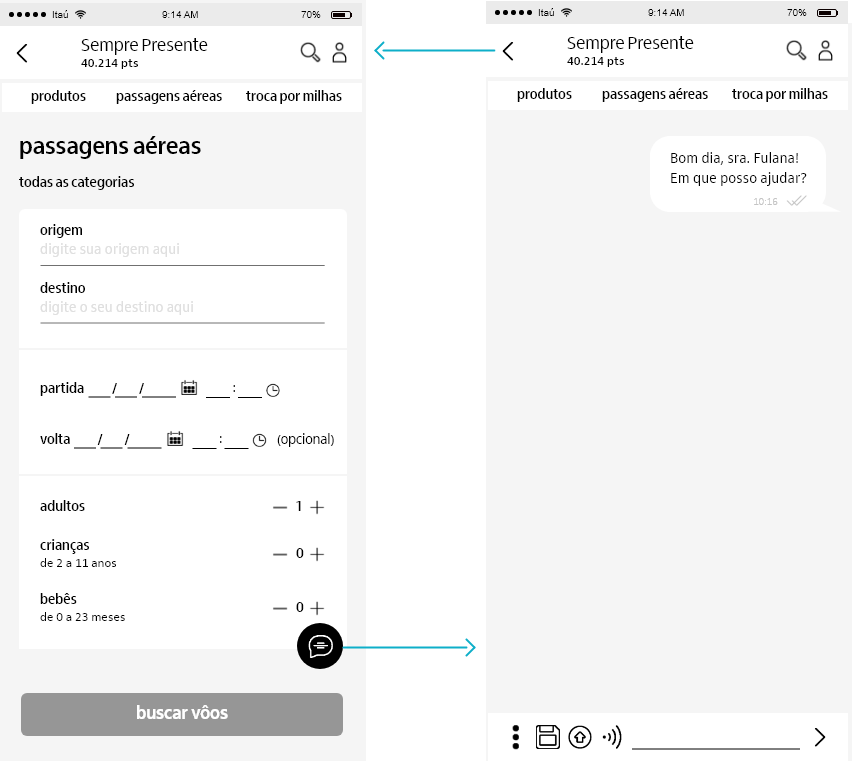
- 4. Implement a floating button to answer questions without leaving the flows.
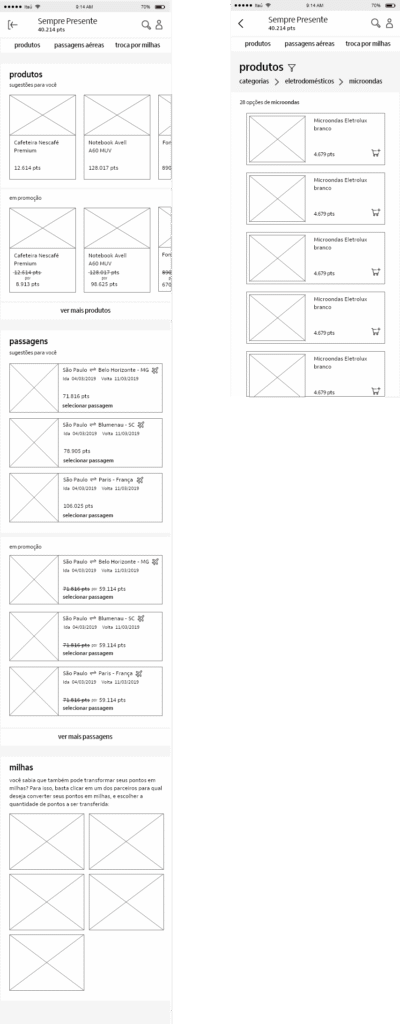
- 5. Facilitate access to product flows, airline tickets, and miles.
- 6. Automate the filling in of card details in shopping cart flows.
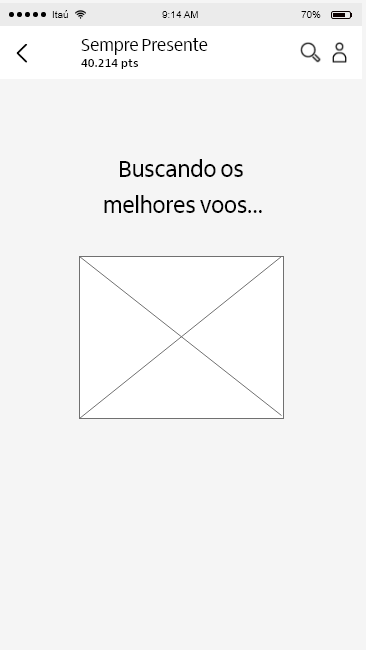
- 7. Create an animation to entertain the user while they search for an airline ticket.
- 8. Facilitate access to Sempre Presente through the card's app.
- 9. Allow the customer to exchange part of the purchase for cash, emphasizing the value of the product in cash.
- 10. Shorten the flow of air travel.
- 11. Allow the customer to choose the airfare class per ticket instead of per exchange.
- 12. Allow the customer to search for flights by approximate time instead of by period.
Iterating
Prioritization
After defining the features, we held a meeting with the Product Owner and the entire team to prioritize their implementation using the impact vs. complexity matrix method. This method establishes a cost-benefit relationship between how much each pain point solved by the feature impacts customer usability and how long it would take to implement them.
First sprint
Through the analysis performed in the planning phase, we defined seven priority features that offered the best cost-benefit ratio. The parameter used was usability impact – complexity = priority.
Impact
Complexity
Priority
Feature
5
2
3
1. More accessible catalog notifications that alert users when their points are about to expire via the app and WhatsApp.
4
1
3
2. Configure the card app so that it doesn’t log the user out while they are in Sempre Presente flows, but requires them to log in again if they access other app functionalities outside of Sempre Presente.
4
2
2
3. Automatically save user progress in flows.
4
3
1
4. Implement a floating button to answer questions without leaving the flows.
3
3
0
5. Facilitate access to the main flows: product, airline tickets, and miles.
3
3
0
6. Automate the filling in of card details in shopping cart flows.
2
2
0
First delivery
The prototype
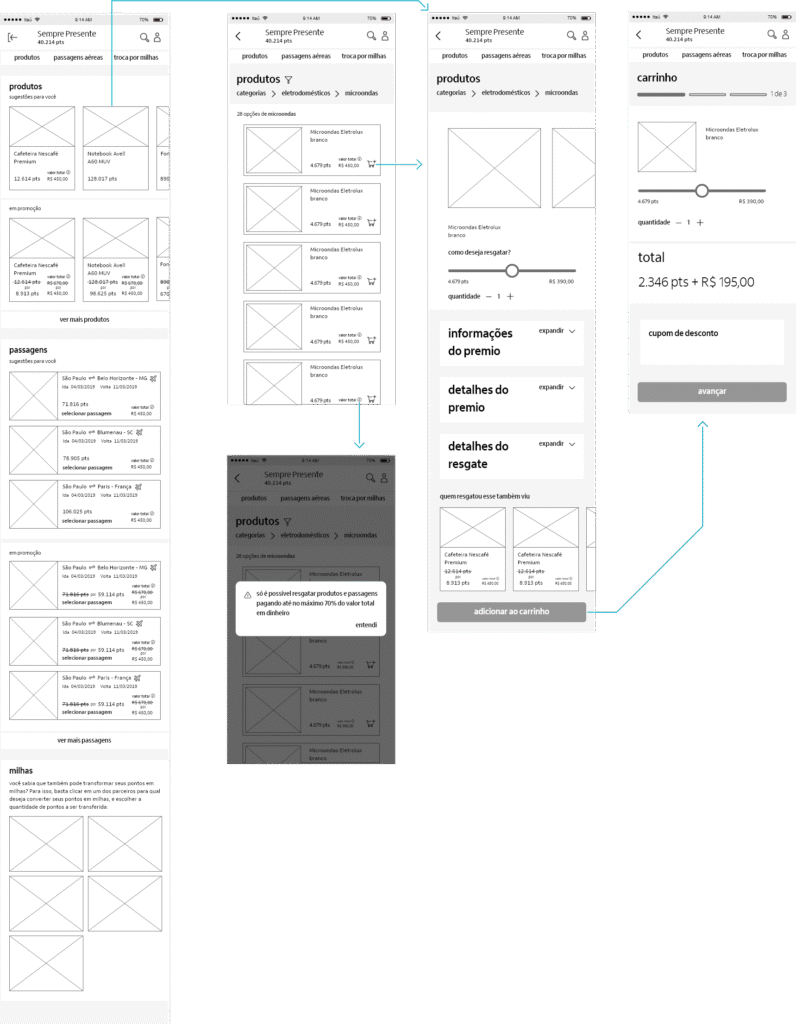
1. More accessible catalog notifications that alert users when their points are about to expire via the app and WhatsApp.
2. Configure the card app so that it doesn't log the user out while they are in Sempre Presente flows, but requires them to log in again if they access other app functionalities outside of Sempre Presente.
3. Automatically save user progress in flows.
4. Implement a floating button to answer questions without leaving the flows.
5. Facilitate access to product flows, airline tickets, and miles.
6. Automate the filling in of card details in shopping cart flows.
passagens
produtos
milhas
7. Create an animation to entertain the user while they search for an airline ticket.
Validation
To optimize time and successfully design the proposed features within the sprint, after designing each feature in low fidelity, I conducted a moderate qualitative usability test to verify if it solved the user’s pain point and thus correct the problematic points in an agile way.
As we validated the solutions, I assigned the wireframes to the team’s UI designer so he could design the high-fidelity prototype within the sprint.
Second sprint
Impact
Complexity
Priority
Feature
2
3
-1
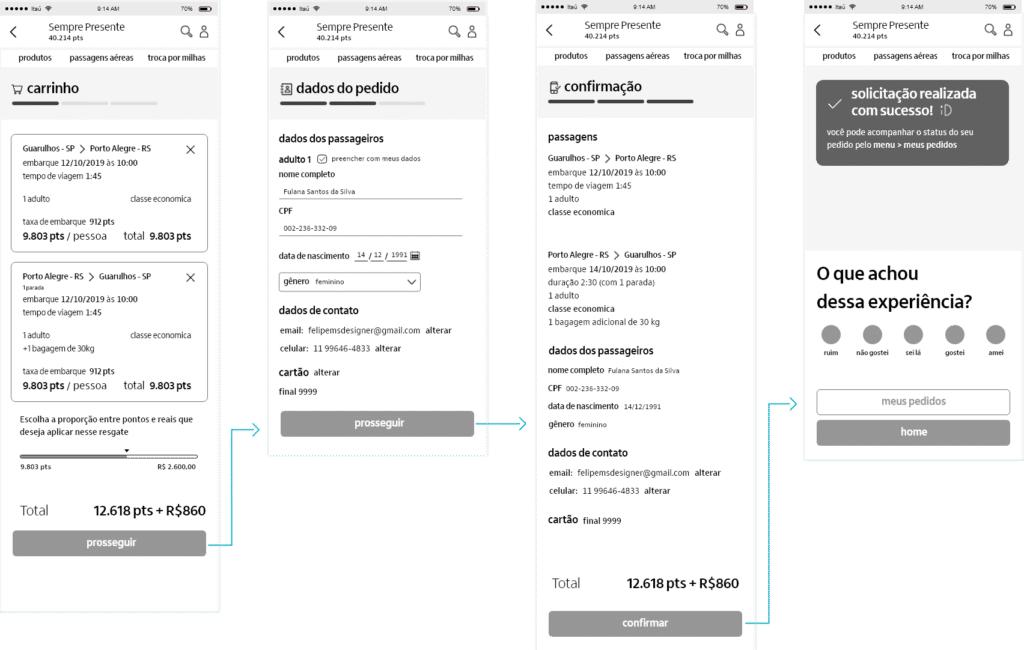
8. Allow the customer to exchange part of the purchase for cash.
2
3
-1
9. Allow the customer to choose the airfare class per ticket instead of per exchange.
1
2
-1
10. Allow the customer to search for flights by approximate time instead of by period.
2
4
-2
11. Shorten the flow of air travel.
While we were designing the second iteration phase, the development team implemented the features designed in the first sprint.
Secound delivery
The prototype
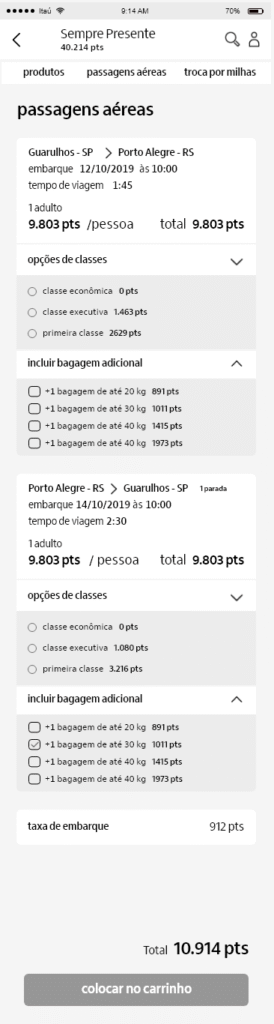
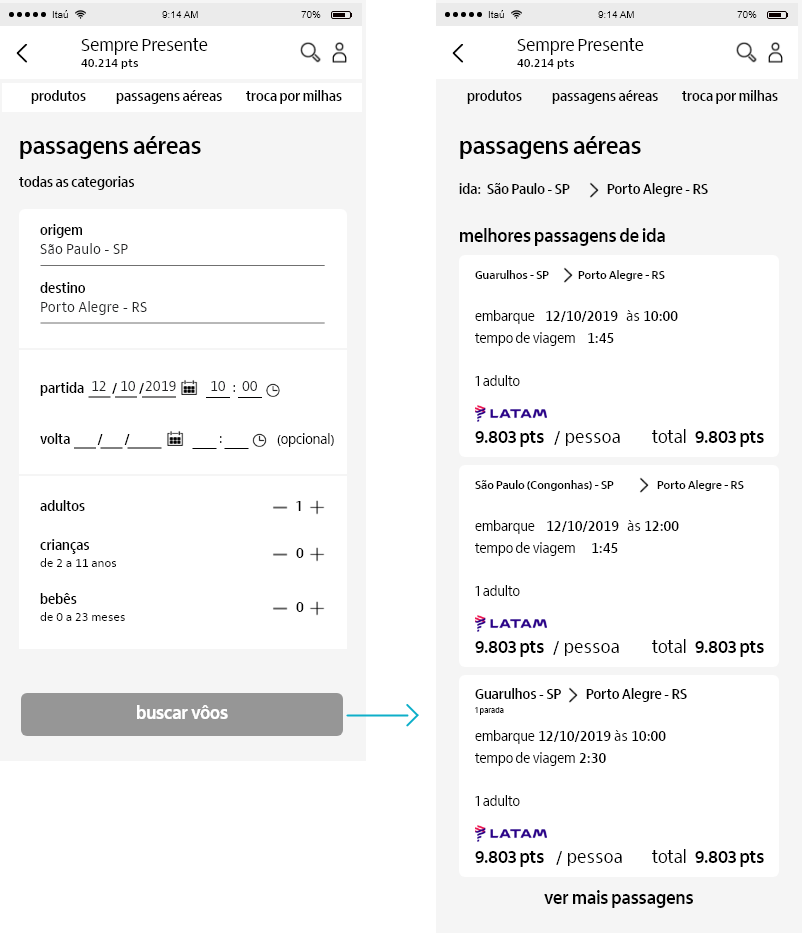
8. Allow the customer to exchange part of the purchase for cash.
9. Allow the customer to choose the flight class per ticket instead of by currency exchange.
10. Allow the customer to search for flights by approximate time instead of by period.
11. Shorten the flow of air travel.
Validation
After designing the experience for the features proposed in the second sprint, I conducted new moderated qualitative usability tests to validate the proposed solutions and make quick corrections before I assign the prototype to the UI designer to delve the solution into hight fidellity.
The result
Since I left the project before the next iteration phase, I couldn’t suggest new validation methods to measure the app’s iteration success. However, I stayed in touch with the project team, and they reported that the project’s NPS went from -19 to 15 after the features were implemented. which indicates a considerable improvement in the customer experience.
Future improvements
- Remapping product categories
- Improve product search functionality.
This improvement were not planned at this initial stage because, despite having a considerable impact on the customer experience, they require in-depth study, which would take more time.